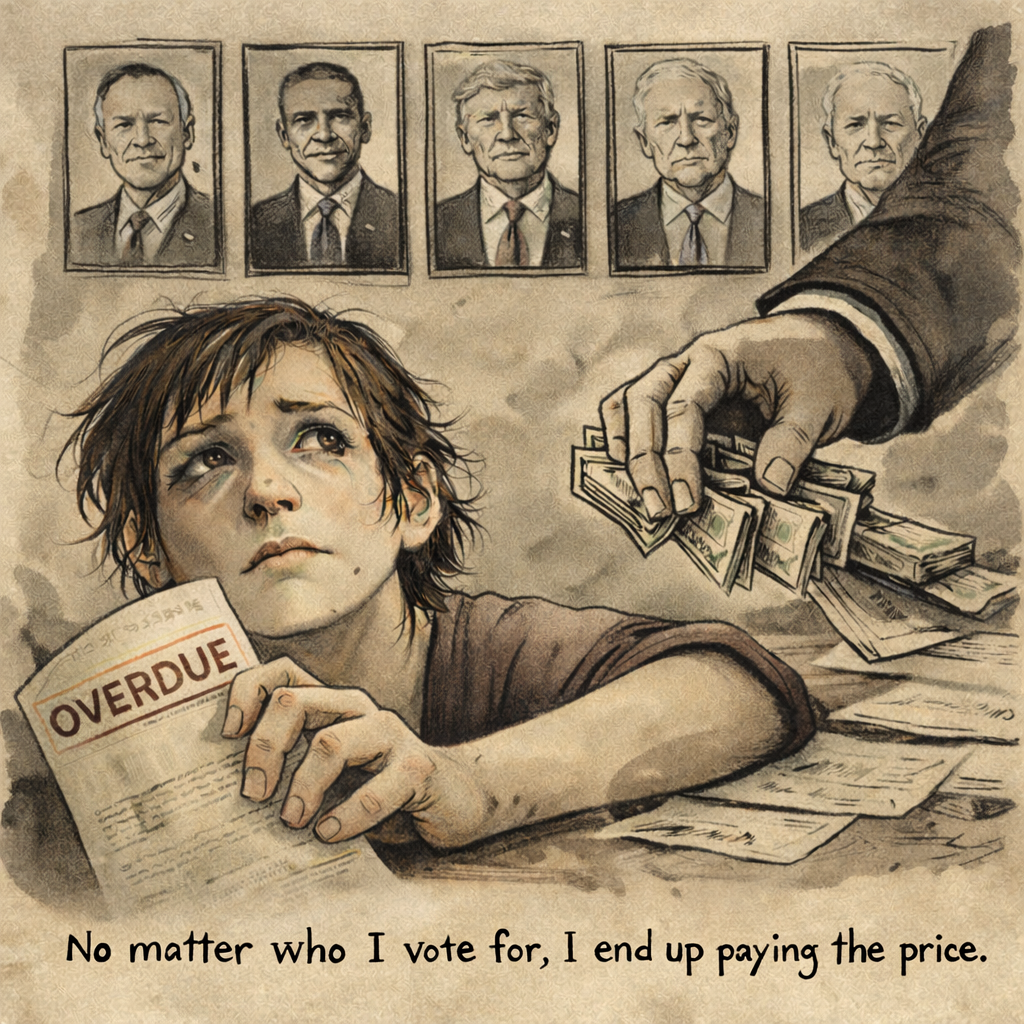
At a certain point, you stop chalking it up to bad luck.
You look back—not in a nostalgic way, but honestly—and something uncomfortable clicks into place: no matter who you voted for, things kept getting harder.
Not overnight. Not in one dramatic collapse. It was slower than that. Bills started taking up more of your attention. Saving felt pointless. One unexpected expense suddenly felt like it could wreck everything. It wasn’t in your head.
Since 2000, you’ve lived through multiple presidents. Different parties. Different styles. Different slogans. And somehow, through all of them, life felt more fragile than it used to.
It really started to show under George W. Bush. He talked about prosperity and an “ownership society,” but what followed were tax cuts that mostly benefited people at the top, deregulation, wars paid for by the public, and then the 2008 financial crash. Banks took reckless bets, the whole thing collapsed, and millions of people lost their homes or their savings.
When it mattered most, the message was clear: the banks would be saved, and everyone else would have to tough it out.
Then Obama came in, inheriting a mess and promising change. To be fair, he stopped the bleeding. The economy recovered—at least on paper. But for a lot of people, it didn’t feel like a recovery so much as a pause.
Jobs came back, but they paid less. Housing prices rebounded faster than wages. Wall Street bounced back completely. Almost no one at the top faced real consequences. Healthcare coverage expanded, but costs kept climbing. Student debt exploded. People weren’t falling anymore, but they weren’t getting ahead either. They were just working harder to stay in the same place.
Then Trump showed up and said what a lot of people were already feeling: the system was rigged. He didn’t sugarcoat it. He named the anger. For people who felt ignored for years, that mattered.
But once the noise faded, the results looked familiar. Big tax cuts for corporations and the wealthy. More deregulation. Record corporate profits. His brand and fundraising exploded. Everyday life? Still heavy. The crisis never really ended. The outrage stayed loud. And the stress landed on the same people it always had.
Different tone. Same direction.
Then Biden. Calm instead of chaos. Empathy instead of insults. A promise to get back to normal and govern for working people. The numbers improved again. Markets hit highs. Employment looked strong. The economy was declared healthy.
But day to day, for most people, not much changed. Rent kept going up. Buying a home drifted further out of reach. Healthcare got more expensive. Student loan relief narrowed and stalled while interest kept piling on. Corporate profits hit new records—again.
And the response, once again, was familiar: it’s complicated. These things take time. Be patient.
Then Trump came back. Not as some shocking revolution, but almost like a stress test. If this had really been about personalities or tone—chaos versus calm—something should have shifted.
It didn’t.
The priorities snapped back into place: extending tax advantages, pushing deregulation, rebuilding close ties with the same industries and donors who always seem to do fine no matter who’s in charge. Wall Street stayed steady. Profits stayed strong. Fundraising surged. The language changed back. The posture changed back.
The pressure on everyday life didn’t.
Rent didn’t drop. Healthcare didn’t suddenly feel safe. Debt didn’t loosen its grip. Once again, the system adjusted smoothly at the top while everyone else absorbed the uncertainty.
At that point, the pattern becomes hard to ignore.
Under Bush, the floor fell out. Under Obama, the system stabilized—but mostly upward. Under Trump, anger was turned into fuel. Under Biden, normalcy returned, but the pressure stayed. Under Trump again, the machine kept running.
Different leaders. Same result.
And that’s when the realization finally lands: your life didn’t get harder because one president failed. It got harder because the system they all operated within never stopped taking from you.
Over time, risk was pushed downward. Security became something you had to buy for yourself. Housing turned into an investment instead of a place to live. Healthcare became a financial gamble. Education turned into decades of debt.
When the system breaks, people at the top get rescued. When corporations stumble, they get cushions. When working people struggle, they’re told to tighten their budgets and wait it out.
Red tie or blue tie, the insulation at the top stays the same.
That’s why the exhaustion feels so deep. You weren’t disappointed once. You were promised—over and over—that this time would be different. The faces changed. The language changed. The promises changed.
Your stress didn’t.
So when politicians say the economy is strong, what they usually mean is that the system made it through another election. You’re still working. You’re still paying. You’re still carrying the load.
And once you see that—once you stop arguing over which leader is better and start noticing who never seems to pay—you can’t unsee it.
Because if life keeps getting harder no matter who wins, the problem was never just the people you voted for.
It was the system they all chose not to change.