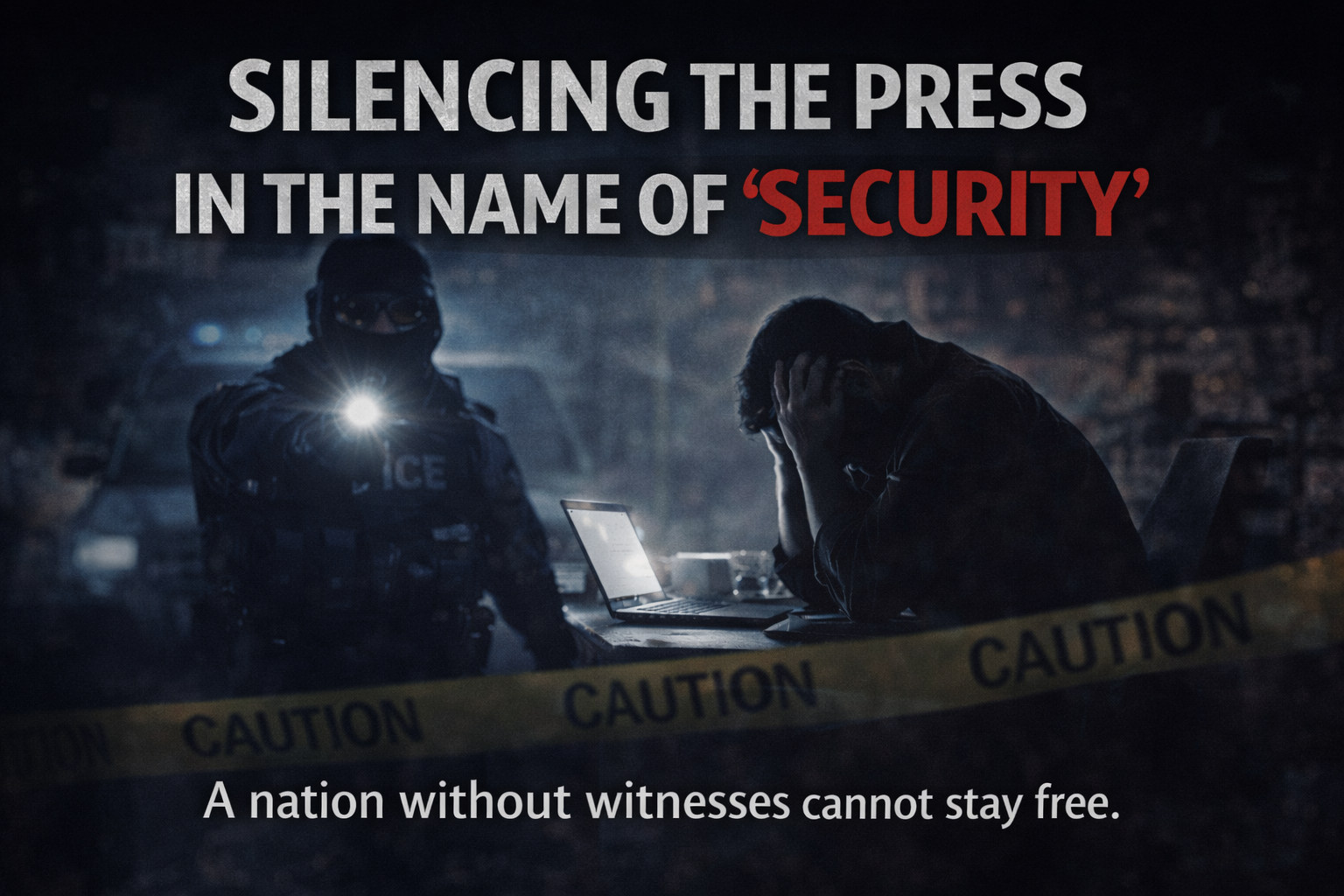
Earlier this month, FBI agents executed a search warrant at the Virginia home of Washington Post reporter Hannah Natanson. According to the Washington Post, agents arrived unannounced, seized her electronic devices, and questioned her about materials she had obtained from a contractor who previously worked with the federal government. Reuters and ABC News both reported that the warrant was linked to an ongoing investigation into mishandling of classified documents.
What made the raid unusual was not that the FBI executed a search — that happens in leak investigations. What major outlets noted was who they searched: a journalist. ABC described the move as “highly uncommon,” and Reuters quoted Justice Department officials who confirmed that Natanson herself was not the target of the underlying investigation.
For decades, federal policy has recognized that the press acts as an intermediary in matters of public interest. Leak investigations typically focus on the government source, not the journalist. That distinction isn’t sentimental — it’s constitutional. The First Amendment protects the press not for its own sake, but because the public has a right to know what its government is doing. The press is one of the few mechanisms capable of asking questions the state would prefer to avoid and uncovering facts that rarely travel through official channels.
The search in Virginia didn’t revoke those protections. No briefing was held announcing new policy. No law changed overnight. And yet, something shifted. A precedent that had been treated as a high bar — that the government should not treat journalists as participants in crimes solely for possessing information — suddenly felt less secure.
Government overreach rarely announces itself with fanfare. It accumulates through small decisions that move the boundaries of what power is willing to do. And once it moves, it rarely moves backward without pressure.
The implications extend beyond newsrooms. Reporters rely on sources — sometimes federal employees, sometimes contractors, sometimes ordinary citizens. If those people fear that speaking to the press risks exposure, interrogation, or retaliation, they stop talking. When they stop talking, transparency stops too. The press becomes quieter, not because journalists lost interest, but because the conditions for truth became inhospitable.
That silence is not neutral. It is fertile ground for abuse.
Democracy doesn’t function on blind trust. It functions on scrutiny. It expects — demands — that government tolerate uncomfortable questions and unflattering revelations. That expectation is written not just into law, but into culture. When a government treats oversight as suspicion, the culture that protects liberty weakens.
None of this means the FBI or Justice Department acted with bad intent. Reuters quoted officials defending the search as legally justified and relevant to a national security matter. Even so, legality and wisdom are not synonyms. Much of what concerns civil liberties advocates is not whether the state can do something, but whether a democracy should permit it without objection.
The consequences of silence aren’t immediate. No freedoms vanish the next day. But over time, the erosion becomes visible. The public learns less. Journalists ask less. Sources risk less. And slowly, the boundary between what the government knows and what the people know becomes less porous.
Nobody needs to shout to defend press freedom. But someone must speak. The work of oversight is not loud, but it is essential. Because a free nation without witnesses is not truly free at all — it is merely comfortable.
And comfort has never been a reliable guardian of liberty