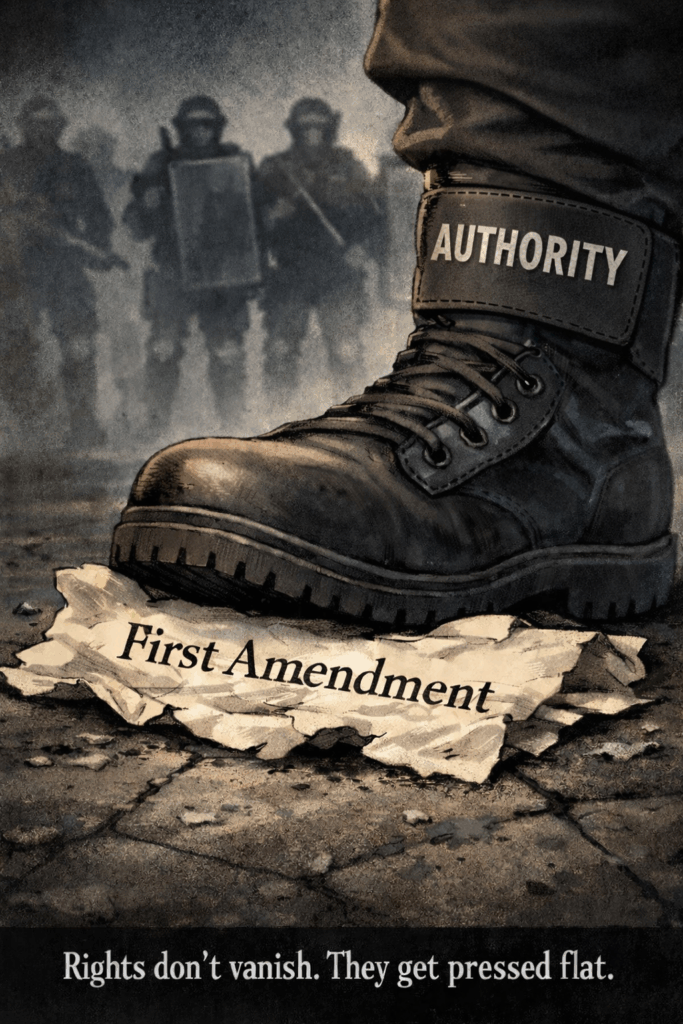
It happened on a cold January afternoon, without sirens or headlines, but by evening the fear was real. On January 21, 2026, a federal appeals court lifted protections for peaceful protesters in Minneapolis, giving federal immigration agents wider power to arrest and use force. For many residents, the ruling felt like a warning: being seen, watching, or speaking could now come with consequences.
The decision itself was brief. The U.S. Court of Appeals for the Eighth Circuit temporarily lifted a lower-court order that had limited how federal immigration agents could respond to protesters. With that ruling, agents from Immigration and Customs Enforcement and the Department of Homeland Security regained broad authority. They could arrest demonstrators, use pepper spray, and break up crowds while the case moved forward.
For people on the streets of Minneapolis, the meaning was clear. The protection they had just gained was gone.
Only five days earlier, on January 16, a federal judge had ruled that peaceful protesters and observers were likely having their First Amendment rights violated. Judge Katherine Menendez reviewed sworn statements, videos, and testimony from residents. Her ruling drew a clear line: people who were not violent and not interfering with law enforcement should not be arrested or sprayed simply for protesting or watching.
For a brief moment, the court had stepped in to protect the public.
Then, just as quickly, it stepped back.
A City Already in Pain
The legal fight cannot be separated from what happened before it.
On January 7, 2026, an ICE agent shot and killed a Minneapolis resident during an immigration enforcement operation. The shooting shocked the city. Vigils formed within hours. Protests followed in the days after. People gathered not only to demand answers, but to make sure the government’s actions were being seen.
Many of those people were not shouting. They stood on sidewalks. They held phones. Some stayed inside their cars, filming from a distance. According to court filings, these were the people who later said they were sprayed with chemical irritants, detained, or arrested.
The fear they described was not loud or dramatic. It was quiet and personal.
If watching is dangerous, they wondered, what happens when you speak?
Judge Menendez took that fear seriously. In her ruling, she warned of a “chilling effect” — when people stop using their rights not because they are wrong, but because they are afraid. When fear keeps people home, free speech fades without ever being officially banned.
January 21: The Protection Lifts
When the appeals court paused the judge’s order on January 21, it did not say the lower court was wrong. It did not rule that federal agents had acted legally. It simply said the limits would not apply while the appeal was reviewed.
But legal nuance did not matter on the ground.
That evening, protesters knew the rules had changed again. Parents wondered whether it was safe to bring their children. Community members debated whether filming was worth the risk. The court was no longer standing between them and federal enforcement.
Supporters of the appeals court decision argue that law enforcement needs flexibility. They say agents must be able to protect themselves and maintain order. The law does allow limits on protests when safety is truly at risk.
But the fear described by residents was not theoretical. It came from real encounters, real dates, and real consequences.
What This Moment Reveals
What happened in Minneapolis between January 7 and January 21, 2026, was more than a legal dispute. It was a test of how safe it is to disagree with the government in public — and what happens when people feel the government is watching back.
The Constitution protects the right to speak, gather, and observe those in power. But those rights only matter if people feel safe using them. When courts step away, power does not disappear. It becomes more visible. More intimidating.
The concern now is not just how the courts will rule later. It is what happens in the meantime. How many people will stay home? How many phones will stay in pockets? How many voices will go quiet?
Fear does not need a law to spread.
Once it takes hold, it does the work on its own.