I’ve said before that I understand why people voted for Donald Trump.
He heard people. He spoke plainly. He acknowledged frustrations that had been brushed aside for years. For millions of Americans who felt overlooked or condescended to, that recognition mattered. It felt like someone finally stepped into the room and said, “You’re not crazy. Something is off.”
That moment of recognition was powerful.
But recognition is not the same thing as relief.
And that’s where the quiet unease has started to grow.
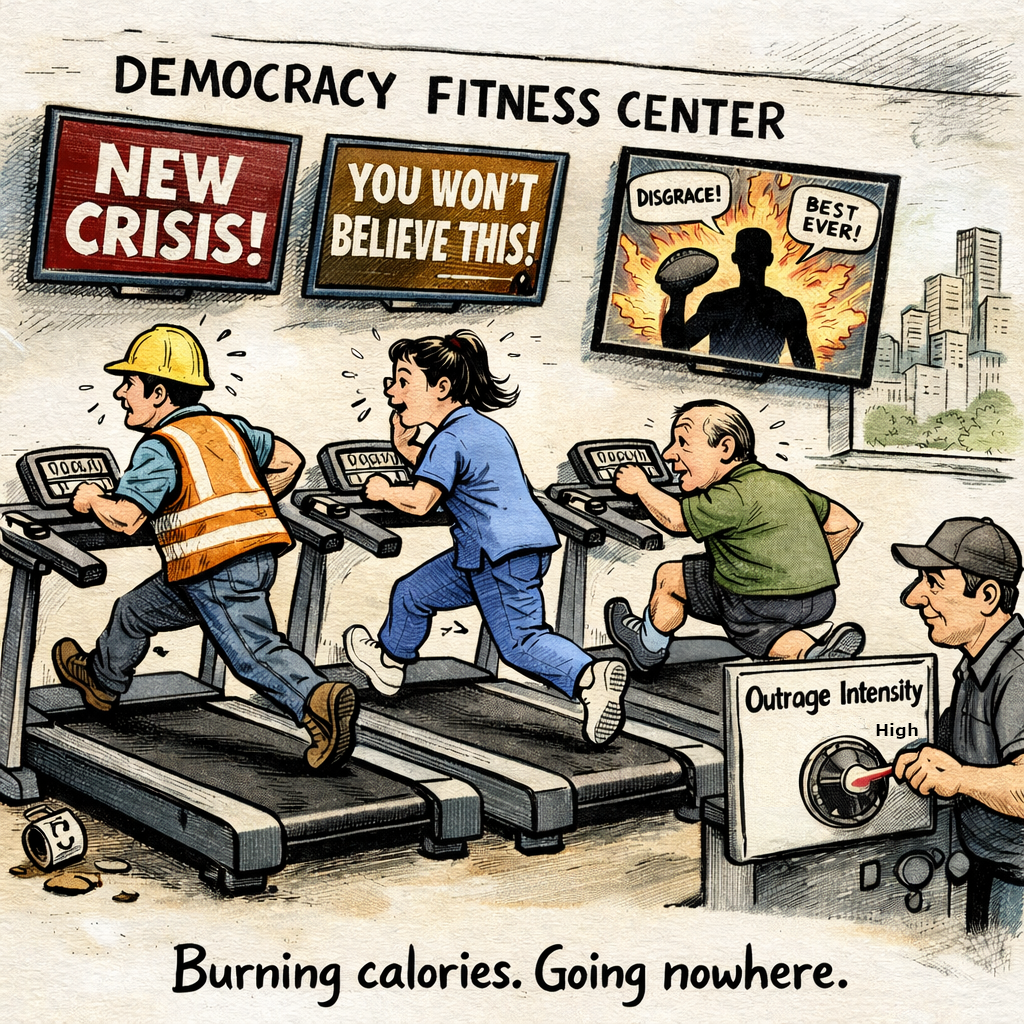
For years now, the country has lived in a state of permanent urgency. There’s always a new crisis. Always a new outrage. Always something that demands immediate loyalty and emotional investment. Every week feels like a turning point. Every month feels historic. Every headline tells you that if you look away, everything will collapse.
That kind of environment does something to people.
It keeps you alert. It keeps you reactive. It keeps you emotionally engaged. But it doesn’t necessarily move your life forward.
Look past the headlines for a moment and look at your own reality. Not the speeches. Not the social media battles. Your grocery receipts. Your savings account. Your blood pressure. Your relationships.
Has life felt more stable?
Has the weight eased?
Or does it feel like you’ve been running for years without ever quite arriving anywhere?
When politics becomes a constant emergency, it stops being about outcomes and starts being about momentum. The fight itself becomes the purpose. The crisis becomes the organizing principle. And the people caught inside it rarely pause long enough to measure whether their actual conditions are improving.
That’s not because they’re foolish. It’s because they’re exhausted.
Exhausted people don’t step back and evaluate long-term results. They focus on the next hit of urgency. They stay loyal to the cause because the cause feels like movement. Movement feels like progress. But motion and progress are not the same thing.
Meanwhile, the system adapts to this constant motion. Fundraising thrives on it. Media cycles thrive on it. Political brands thrive on it. Every new alarm strengthens the identity of the fight. Every fresh outrage renews the sense that the battle must continue.
But if the battle never winds down, what exactly are we winning?
Real leadership, at its best, aims to lower the temperature over time. It works toward making itself less central, not more. It wants people to feel steadier, safer, more confident about tomorrow than they did yesterday.
Permanent crisis does the opposite.
Permanent crisis keeps you leaning forward. It keeps you scanning for the next threat. It keeps your emotional energy tied up in defending or attacking, instead of building or stabilizing. It keeps you busy.
And when you’re busy reacting, you don’t have time to notice whether your actual life is improving.
That’s the part that’s hardest to confront.
The anger that fueled this political era was real. The frustration wasn’t manufactured. Working Americans have been squeezed for decades. Wages haven’t kept pace with costs. Healthcare remains precarious. Communities have felt hollowed out. It was right to demand that someone acknowledge that pain.
But acknowledgment alone doesn’t lighten the load.
If after years of urgency your grocery bill still feels tight, your job still feels uncertain, and your family conversations still feel strained by politics, it’s worth asking a difficult question:
Are we moving forward, or are we just moving fast?
There is a difference.
Speed can create the feeling of action. Volume can create the feeling of importance. Loyalty can create the feeling of purpose. But none of those guarantee stability.
At some point, people begin to notice that their hearts have been racing for a long time. That the tension hasn’t broken. That the promised turning point keeps shifting just over the horizon.
That realization doesn’t require abandoning your values. It doesn’t require denying the problems in the system. It simply requires measuring results instead of emotion.
If the crisis never ends, if the urgency never settles, if everyday life never feels lighter, then maybe constant alarm isn’t a side effect of change.
Maybe it’s the mechanism.
And maybe the real question isn’t whether the original anger was justified — it was — but whether living in a permanent state of emergency is actually delivering the relief people were promised.
Because running hard feels powerful.
But eventually, people start asking where they’re actually going.