Violence has been part of America’s story since before the nation was founded. The struggle for independence itself was born through conflict, and the centuries that followed brought wars, civil unrest, and division. Yet woven throughout that same history is a less-told narrative: the ability of Americans to confront hardship and ultimately choose the path of reunion, rebuilding, and reform.
From the Revolution to the Civil War, America’s earliest conflicts revealed both deep fractures and a resolve to create a better, more unified society. The Civil War remains the most devastating chapter in our history, taking more American lives than any foreign conflict. And yet its aftermath also marked one of the greatest expansions of constitutional rights, laying legal and moral foundations that future generations would continue to build upon.
The 20th century brought new challenges. Economic hardship, industrial violence, and global wars reshaped the country’s sense of identity and purpose. World War II, in particular, produced a renewed understanding that national strength depends not only on military power, but on collective sacrifice — across class, race, gender, and ideology. The “home front” became as essential as the battlefield, proving that unity itself can be a force of national survival.
The Civil Rights Movement of the mid-century confronted violence of a different kind — systemic, cultural, and often state-sanctioned. Yet the victory of that movement did not come solely through confrontation. It succeeded because millions of Americans, across backgrounds and beliefs, ultimately recognized a shared stake in justice and equality. Change emerged not from uniformity, but from consensus born through moral courage and public pressure.
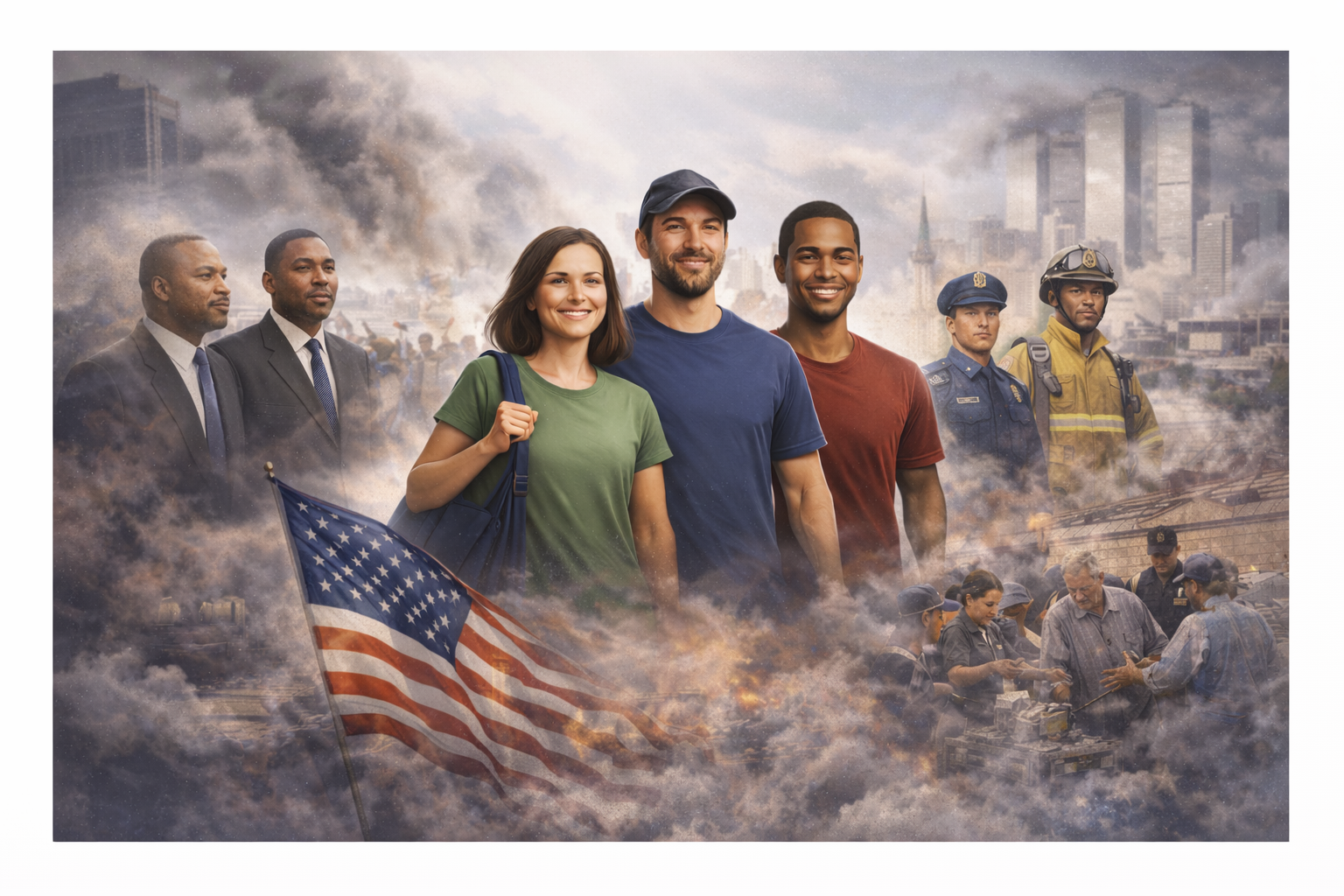
More recent decades have brought new wounds. The terror attacks of September 11th were meant to divide Americans and spread fear. Instead, the immediate aftermath revealed once again a familiar pattern: people showing up for one another. Strangers lined up to donate blood, firefighters from across the country drove to New York, and civic institutions briefly aligned toward a common goal. That unity did not erase the pain — but it demonstrated that national identity can be reaffirmed through solidarity rather than retaliation.
It would be dishonest to pretend that America’s cycle of conflict and renewal is easy or inevitable. Violence, whether political, cultural, or physical, leaves scars. But through every chapter of turmoil, the country has shown a capacity to repair itself not by pretending differences don’t exist, but by choosing to work across them.
Our history reminds us that unity is not the absence of conflict — it is what we build after conflict ends. When Americans decide that the nation’s future matters more than past grievances, progress follows. That tradition is just as real as the violence we inherit. And it’s worth remembering that every time we have come together, we have emerged stronger, more just, and more capable of fulfilling the democratic promise that began with “We the People.”